Stamped, colored and exposed aggregate · Elgin, IL
Stampcrete Patio and Stamped Concrete in Elgin
Slate, stone, brick and plank patterns pressed into a new patio, walk or step, with the color in the concrete and a second tone in the joints. It costs more than broom finish and asks for a sealer every few years. Here is how to choose it well.
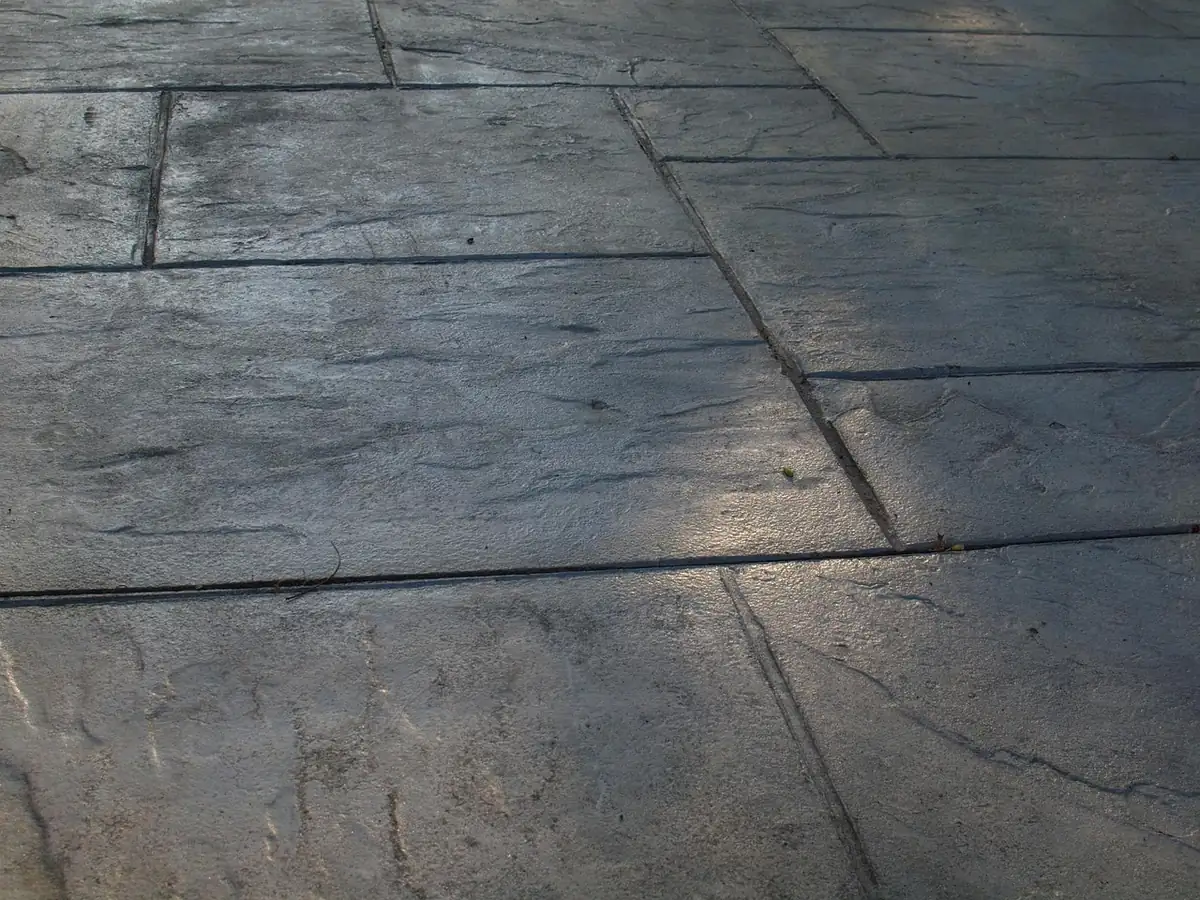
Stamped concrete patterns: ashlar slate, roman slate, herringbone and wood plank
Stamped concrete is ordinary air-entrained concrete with a texture pressed in before it hardens. The pattern is the first decision and the one you live with longest. On the wall below, every common pattern is drawn at once; switch the color pair and the whole wall changes, then click a tile to magnify it and read what it’s good and bad at.
-
Cut-stone rectangles and squares in a repeating set, with a cleft slate texture. A common patio choice. Its grout lines run straight, so saw-cut control joints can run down them and almost disappear.
-
Irregular stones with no obvious repeat, so it forgives a seam where two mats meet. The catch: straight saw cuts can’t follow wandering joints, so control joints cut across stones and show.
-
Bricks in a zig-zag. Busy enough to hide small blemishes and good on walks and driveways where a direction helps. Joint lines stagger, so plan the cuts before the mats go down.
-
Bricks in offset rows, like a wall laid flat. Plain on a big field; most often used as a border band around another pattern.
-
Boards with grain and staggered ends, popular next to decks and cabins. Joints cut across the planks can read as board ends if they are laid out with the plank widths in mind.
-
Rounded stones with wide, deep joints: the most texture of the set. Deep joints hold water and slush and catch a snow shovel, which matters on a walk you clear all winter.
Drawn tiles, not photos: screen color is only a guide, so pick the final pair from cured samples outdoors. The release tone settles in the low joints and texture; the base color covers the stone faces.
Ashlar slate stamp patterns and roman slate are the usual patio choices; brick and plank suit walks and the area next to a deck. Any of them can carry patterned concrete onto steps, a front porch or a walk so the whole entry matches; a stamped front walk follows the same rules as any concrete sidewalk on private property.
One practical test: think about winter. A walk you shovel every morning is easier in a shallow slate texture than in deep cobblestone, where the joints hold slush and catch the blade. Elgin averages about 32 inches of snow a year (NOAA 1991–2020 normals).
Stamped cement patio borders and color
A border is the cheapest way to make a stamped cement patio look designed rather than poured. It frames the field, it hides where the pattern mats meet the forms, and it gives the edge a clean line against the lawn. A soldier course is the classic frame. Pick a style and the plan redraws, to scale.
-
The pattern runs to the form. It is the least hand work, but the edge of the pattern looks sliced off along a straight form, and the mats still need tooling where they meet the edge.
-
A band of brick shapes set square to the edge, stamped with a border mat or tooled by hand. It frames the field and hides where the pattern meets the form, which is why it is the most common choice.
-
A plain “picture frame” with no imprint, finished with a float or a light broom. Ask for it not to be hard steel-troweled: NRMCA advises against steel trowels on exterior slabs, and a glassy band is slick when wet or icy.
-
The border gets a second base color, usually darker than the field. Two colors on pour day means more hands and tighter timing, or a stain on the band later; either way it costs more than one color.
Picking two colors that age well
Stamped color comes in two parts: the base, either integral color mixed in at the plant or a color hardener floated into the surface, and the colored release that settles into the joints. Pairs close in tone look like natural stone; strong contrast looks busier and shows wear sooner. Brick-red bases next to a red-brick house rarely match, so judge samples against your siding and foundation, in daylight, cured.
The slab under the pattern
Stamping changes the top half inch, not the slab. Elgin’s patio quick guide calls for 3000 psi air-entrained concrete at least 4 inches thick, with a 4 inch gravel base and wire mesh recommended, and it applies to a stamped patio exactly as it does to a broomed one. The same permit, plat of survey and final inspection apply too.
How a stampcrete patio is poured, colored and stamped
Before the truck comes it’s the same job as any patio: permit, plat of survey with the patio drawn on, JULIE locate, forms and base, and if you want it, the City’s optional pre-pour inspection to confirm the location. Stamp day is different. These are the questions homeowners ask while it happens, in order.
-
6:30 a.m.
Elite Concrete ElginStamping has a window. The mats go down when the surface is firm enough to hold a crisp imprint but still soft enough to take it, and sun, wind and heat shorten that window. A cool morning gives the crew the most time. On a big patio that window decides how many people are on the job, or whether it’s poured in two sections.
-
Pour
Elite Concrete ElginEither. Integral color comes mixed into the truck, so the color runs all the way through. A color hardener is a dry powder broadcast on the fresh surface and floated in, giving a stronger, denser top color. Many stamped jobs use one or the other as the base and a contrasting release as the second tone.
-
Stamping
Elite Concrete ElginThat’s the release agent. It keeps the rubber mats from sticking and pulling the surface, and because it’s colored, what stays in the joints and texture becomes the darker, antiqued tone you picked on the sample board.
-
Same evening
Elite Concrete ElginBecause concrete shrinks and cracks, and NRMCA’s line is that “joints are simply pre-planned cracks.” Its joint sheet puts conventional saw cuts within 4 to 12 hours of finishing, at least a quarter of the slab’s depth, about 10 feet apart on a 4-inch slab and never more than 15 feet. On ashlar or brick patterns a good layout runs the cuts down grout lines so they disappear.
-
Next days
Elite Concrete ElginOnce the slab has hardened enough to scrub and rinse without marking it. The loose release washes away; what’s bonded in the low spots stays, and that is the second tone you chose.
-
Weekend
Elite Concrete ElginFeet come well before furniture and grills, and the timing depends on the weather, so ask for it in writing. The slab needs to stay moist while it cures: NRMCA notes concrete left to dry out can lose as much as half its potential strength.
-
Later
Elite Concrete ElginAfter the release is washed off and the slab is dry. What goes on and how often it’s renewed is the biggest upkeep decision with stamped work, so it has its own section below.
Sealing and resealing stamped concrete in a salt-and-snow climate
Elgin’s weather is hard on decorative surfaces. NOAA’s Elgin station averages 139 days a year with a low at or below freezing. City crews treat the streets with road salt and “Supermix,” a brine of beet juice by-product, calcium chloride and salt, and every car carries some of it onto the driveway and the walk beside it.
Most stamped work is sealed with a film-forming acrylic that deepens the color and gives the wet look people like. NRMCA’s scaling sheet, written for exterior slabs in general, names a breathable silane or siloxane penetrating sealer and calls late summer “the ideal time for surface treatment.” Ask which one your contractor uses on stamped work and why; a film looks richer, a penetrating sealer is less slippery and doesn’t peel.
When stamped concrete needs resealing
- Water soaks in and darkens the surface instead of beading.
- The color looks chalky or the release tone has faded from the high spots.
- The sealer is white or cloudy in patches, often from moisture trapped under a thick film.
No honest contractor can give you a fixed resealing schedule; sun, traffic and salt decide it. Two rules from NRMCA cost nothing: no deicing salt in the first winter, and never ammonium sulfate or ammonium nitrate, which are in most fertilizers and “destroy concrete surfaces.” Sweep lawn fertilizer off the patio.
Decorative concrete beyond stamping: exposed aggregate and board-formed texture
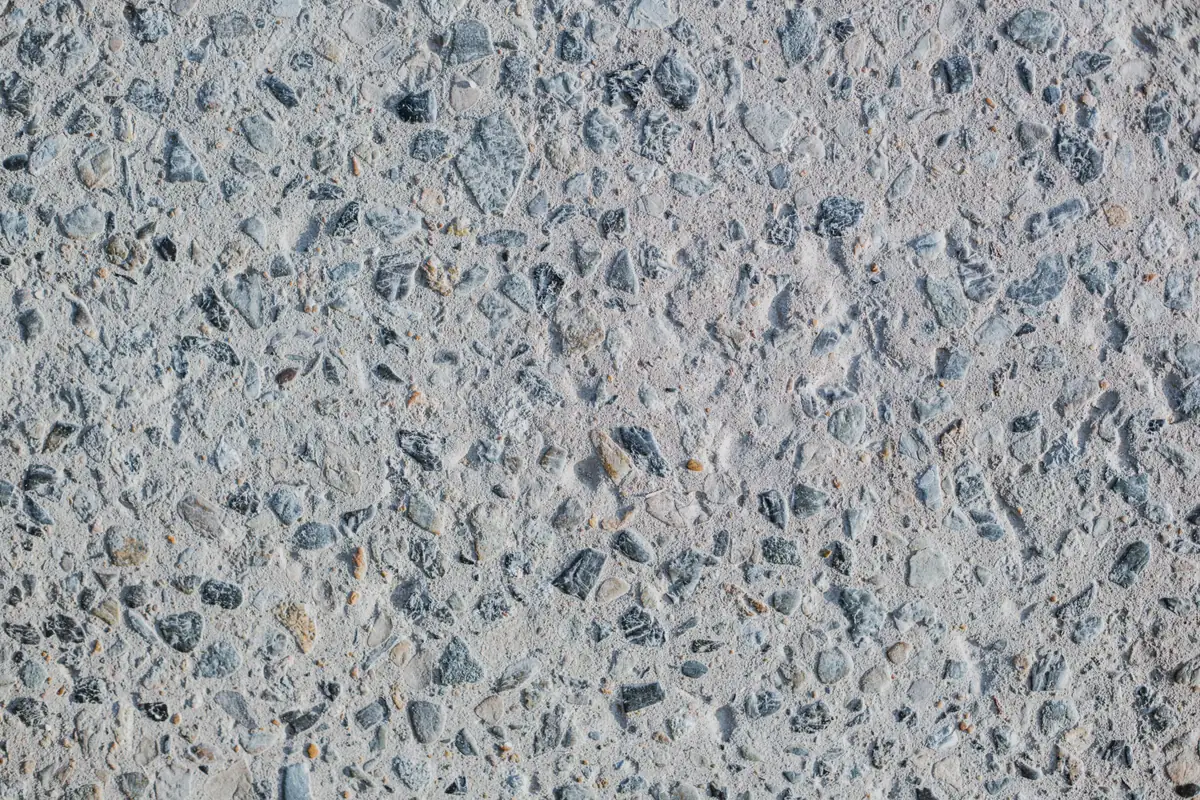
Exposed aggregate concrete
Instead of pressing a pattern in, the crew washes or retards the top paste so the stones in the mix show. The result is a gritty, non-slip surface with no pattern to wear off. Exposed aggregate patios and driveways hide dirt and tire marks well; the look depends on the stone the ready-mix plant uses or on a decorative stone seeded into the surface.
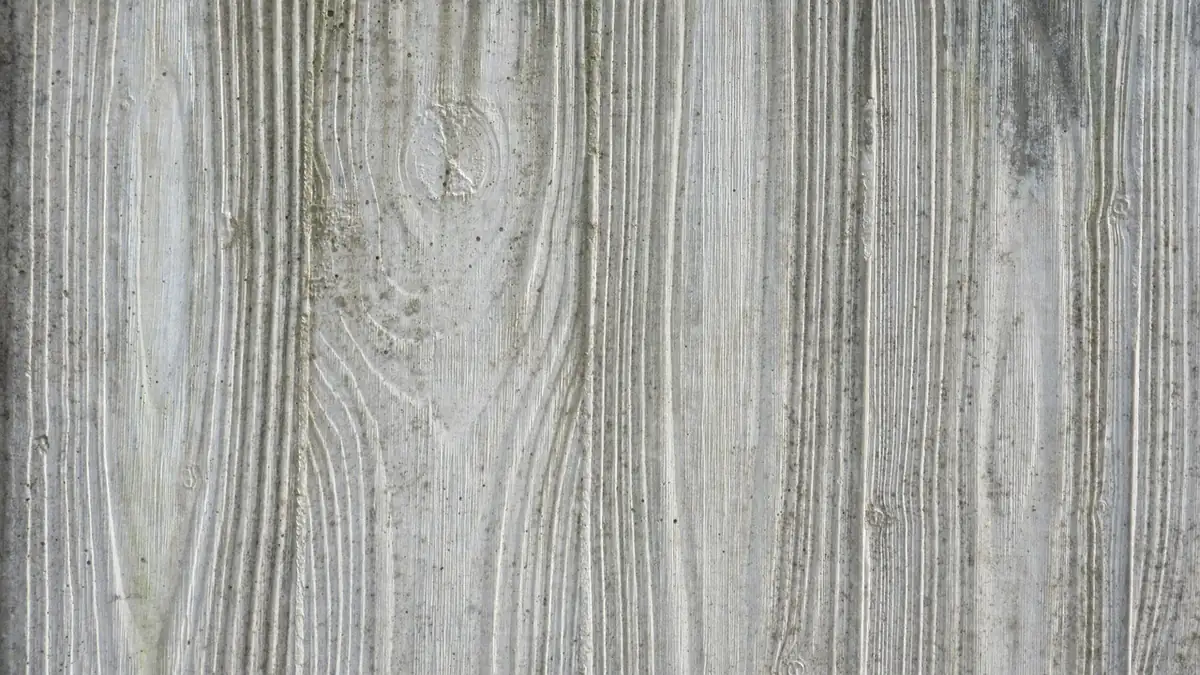
Board-formed and wood-grain texture
On vertical faces, such as step risers, low walls and planters, forms lined with rough boards leave a wood-grain imprint in the concrete. It pairs well with a wood-plank stamp on the flatwork. Stained concrete is the third option: color applied to a cured slab, plain or stamped, and the usual way to restain stamped concrete that has faded.
Stamped concrete patio cost: what moves the price
There is no reliable published price for stamped concrete in Elgin. HomeAdvisor’s Elgin stamping page showed no figures when we checked, and we won’t fill the gap with a national number dressed up as local. Two stamped patios of the same size can differ a lot in price, and these are the reasons.
- Pattern: seamless texture skins go faster than pattern mats that must line up; hand-tooled detail costs the most.
- Colors: one base color plus release, or a second color on a border band.
- Border: the 12x16 plan above has 40 feet of edge to tool.
- Shape and steps: curves, radius corners and stamped step treads are slow hand work.
- Old slab and base: tear-out, haul-away and stone under the new slab.
- Crew size: a large pour needs more people in the stamping window.
- Upkeep: resealing every few years is part of the real cost.
Stamped concrete contractors near me: what to check
Stamping rewards experience more than almost any other flatwork, because there is no second try once the surface sets. When you compare stamped concrete companies, these questions sort them quickly.
- Show me one that’s been through winters. A job a few years old shows how the sealer, color and joints held up.
- Cured samples of my colors. Fresh-looking brochure chips are not what a sealed slab looks like after a summer.
- Where will the joints go? Ask to see the layout on the pattern before the pour, not after the saw.
- How many people on pour day? Enough to finish stamping inside the window, plus someone on detail tooling.
- Which sealer, and who reseals? Product type, first coat timing, and what resealing would cost later.
- Who handles the permit and inspections? Patio permit, plat, optional pre-pour inspection, final.
Stamped work is one finish among the slabs, walks and driveways we pour as a concrete contractor in Elgin. If your patio is mostly for a grill and chairs and you don’t want upkeep, we’ll tell you a broom finish is the better buy.
Send your stamped patio plans for an estimate
Tell us the rough size and shape, the pattern and colors you’re leaning toward, and whether there’s an old slab to remove. A photo of the yard from the back door and one of the house siding help with color.
Already have a sound patio and just want a new look? Ask about a stampable overlay instead of tearing it out.
Stamped and decorative concrete questions from Elgin homeowners
Is stamped concrete slippery?
A sealed stamped surface is slicker than a broom finish, especially wet or frosty. Deep-texture patterns help, and an anti-slip grit can be mixed into the sealer. For the main path to a door, many homeowners keep a broomed or textured border band.
Does stamped concrete crack?
It can, like any slab. Control joints decide where: NRMCA spaces them about 10 feet apart on a 4 inch slab, 15 feet at most, with panels close to square. A good layout hides the cuts in the pattern’s grout lines. A stamped slab that cracks outside its joints can be patched through concrete repair, but the color match is never perfect.
Can you stamp an old slab instead of pouring a new one?
Only with a stampable overlay, and only if the old slab is sound and not moving. That is a resurfacing job, with its own limits; one manufacturer places its stampable overlay 1/8 to 1/2 inch thick.
Do I need a permit for a stamped patio in Elgin?
Yes, the same as any patio: the City’s patio guide asks for a permit before work begins and a plat of survey showing the patio and setbacks, offers an optional pre-pour inspection, and requires a final inspection. Patios go through planner review, which the City estimates at about 7 to 10 business days.
Can I get a stamped driveway?
Yes, though Elgin’s driveway guide sets a higher bar than its patio guide: 4000 psi air-entrained concrete on at least 4 inches of compacted gravel. Driveways also take road salt off every car, so the sealer works harder. The driveway replacement page covers the City spec.
Can faded stamped concrete be restored?
Often. A deep clean, a tinted or color-enhancing sealer, or a stain can bring back tired color. Flaking or scaled stamped surfaces are a different problem and usually point to the slab, not the sealer.
Terms used on this page (2)
- Integral color
- Pigment mixed into the whole batch at the plant, so the color goes all the way through the slab. Softer than a broadcast color hardener, and a chip doesn’t show gray underneath.
- Soldier course
- A row of bricks set side by side with their long edges square to the edge they border. On stamped work it’s a border mat or hand-tooled band that imitates that row.